

Should You Get Your Home Pre-Inspected?

Home Pre-Inspection

Surprises are supposed to be fun. But in the world of real estate a surprise can be a catastrophic deal breaker that leaves a bad taste in everyone’s mouth. As a home owner you know your home inside and out and you’ve lived in it for this long without any problems, right? But let’s face it, not everyone is qualified to spot building code deficiencies. When was the last time you actually crawled up into the attic to inspect the integrity of your roof supports? Truth is, most of us don’t really pay attention to the minor details of our home until something needs to be fixed. And more often than not there may be minor deficiencies we don’t even know about that may matter to some people, and not matter to others.


Usually when a purchaser makes an offer on a home they are offering a price based on what they think they are getting at that time. They are assuming there are no major unknown issues with the house, usually based on the Property Condition Disclosure Statement made by the seller, which discloses any issues with the home that the owner is currently aware of. If a home inspection comes back with a bunch of issues this opens up negotiations for repairs and price adjustments or the purchaser may walk away from the deal. Usually at this point both parties have already agreed to on a purchase price and more often than not neither party wants to leave more money on the table. This is where things can get hairy and it’s usually up to the agent to find creative solutions.


One way to avoid these problems is to get a pre-inspection on your home. Getting your home pre-inspected gives you peace of mind that there will be no surprises down the line and it gives buyers confidence in what they’re buying. Not only that, but buyers are more open to offering more on a property if they know that they are buying a quality home with little to no issues. Another benefit is that, as a seller, you can use the home inspection to spot any deficiencies in the home before setting a list price. Now you have a more accurate pricing of your home and if there are no major problems with the home you can use the pre inspection as a marketing tool to let prospective buyers know just how great your home is.


Aside from all this, if nothing else, a pre-inspection can let you know which items should be addressed before hitting the market. Again, not everyone knows or can spot every deficiency in a home and it would be nice to have an unbiased third party take a look and let you know the items that should be addressed. And not every item needs to be addressed. Home inspections are notorious for pointing out every single thing about a home that doesn’t adhere to current building code. For example, I’ve seen home inspections state that the steps on the stairs were an inch too short or there were only two outlets in a bedroom instead of three. These things are probably not issues that need to be dealt with. It’s important to remember that a home inspection will compare your home with the current building code. If a home is 30 or 40 years old then it would have been built according to an older building code so most small things will be given a free pass unless it’s a safety issue or the home insurance provider has an issue with it.


As of the time of this writing a home inspection will run about $400 to $500 and it is usually paid by the purchaser during their home inspection period. A pre-listing home inspection would be paid by the seller but could save you time and money down the line. If you don’t mind coughing up a few hundred dollars to save you a few thousand dollars of headache down the road, I’d say that’s well worth the money.

2019 Federal Budget Adds More Help For First-Time Home Buyers

2019 Federal Budget Canada

With rising housing costs across the country, the federal government has been pressured to do something to help younger first-time home buyers who have been priced out of the higher priced areas such as Toronto and Vancouver. The federal budget for 2019 has been released and there are two main additions regarding real estate and first-time home buyers.

CMHC First-Time Home Buyer Incentive

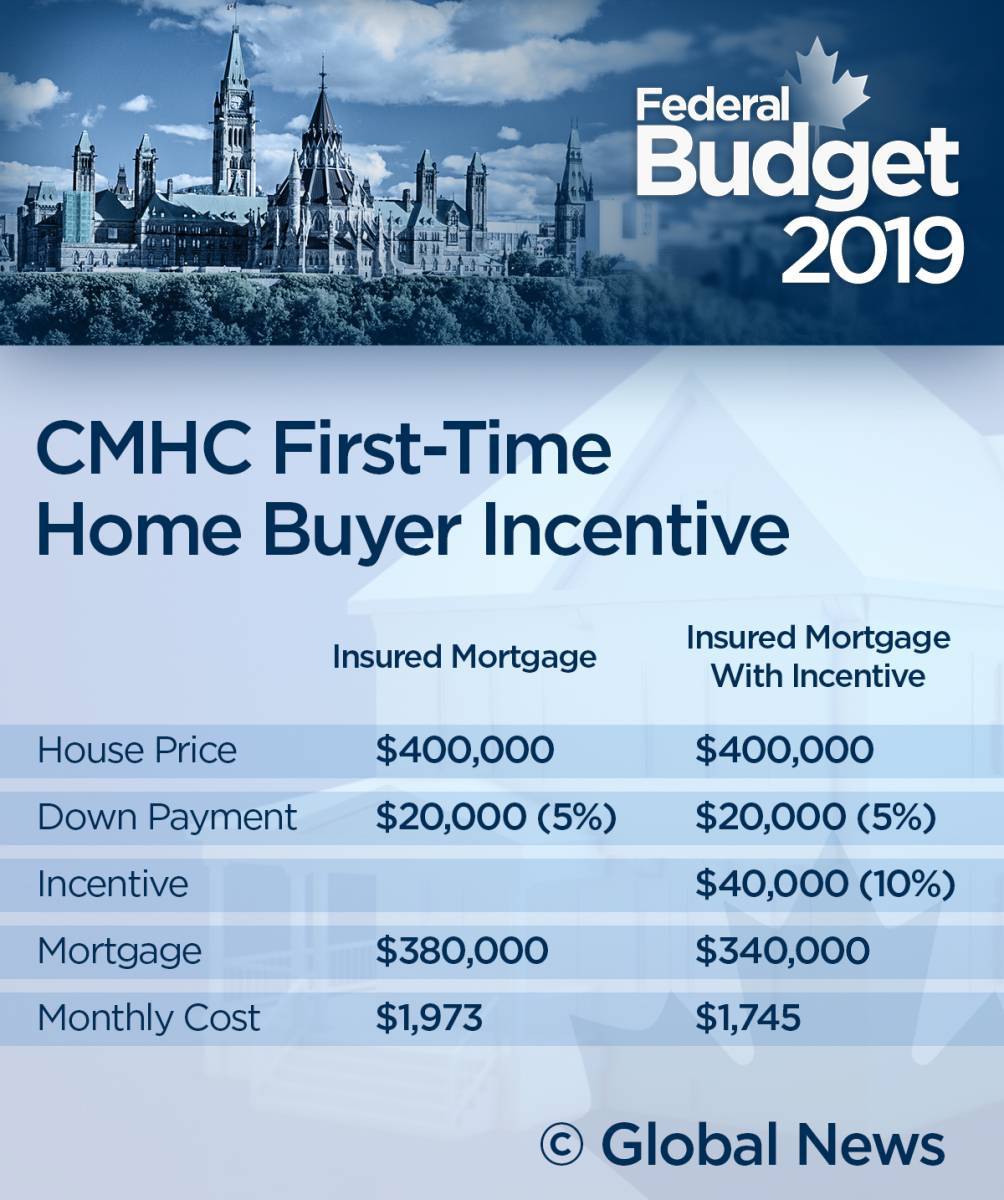
The budget introduced the Canadian Mortgage and Housing Corporation (CMHC) First-Time Home Buyer Incentive. This allows prospective buyers who have the minimum down payment for a home to apply to finance between 5% and 10% of their mortgage via a shared equity program. Buyers can get up to 10% on newly constructed homes while 5% applies to existing homes. This would lower the mortgage amount borrowed and would help first-time home buyers qualify for a higher mortgage, even with the mortgage stress test, while also lowering their monthly mortgage payments.

This incentive would only apply to insured mortgages and the buyer would still have to come up with the minimum 5% down payment. Applicants must have a maximum household income of no more than $120,000 and the purchase price of the home can only be 4 times their household income. So, for a family of first-time home buyers with an annual household income of $80,000 the total mortgage size would be $320,000.

The budget document states “For example, if a borrower purchases a new $400,000 home with a 5% down payment and a 10% CMHC shared equity mortgage ($40,000), the borrower’s total mortgage size would be reduced from $380,000 to $340,000, reducing the borrower’s monthly mortgage costs by as much as $228 per month.”

Buyers will still have to repay the loan, although it is unclear at this point what the terms would be. Applicants still must qualify under the federal stress test, which ensures that borrowers will be able to keep up with their payments if their interest rates were to increase. However, the lower mortgage means the borrower would only need to qualify for the lower mortgage amount.

The finance department is hoping the new program will pass in time for a September, 2019 launch.

First-Time Home Buyer Incentive

Home Buyers’ Plan (HBP) Gets An Increase

The amount a borrower can withdraw from their RRSP for a down payment using the Home Buyers’ Plan (HBP) has been increased for the first time in 10 years. With increasing home values the federal government has increased the amount you can withdraw from your RRSP account from $25,000 to $35,000, or $70,000 per couple. The new limit will apply to withdrawals made after March 19, 2019, making it effective immediately.

2019 Corner Brook Real Estate Market Outlook

2019 Corner Brook Real Estate Market

What Happened In 2018

The Corner Brook real estate market has been slowing down over the last few years and we are now in a buyer’s market. Last year we saw the number of new listings decrease by 6.7% compared to 2017 while sales stayed the same (189 sales in 2017 and 190 sales in 2018). It’s a great time to find a good deal on a new home. If you’re a seller looking to get your home sold then it’s important to make sure your REALTOR© offers extensive marketing on your property.

Days On Market (the number of days it takes a home to sell when priced at market value) dropped to 79 days, however the average home price also dropped to $199,404, for all housing types. Interestingly, the median sales price dropped by a larger margin, telling us that more homes are selling in the lower price range of about $185,000 as opposed to the same home selling for less, although the average sale price did drop by 3.6%

2017 2018 Percent Change
Average Sale Price $206,795 $199,404 -3.6%
Median Sale Price $199,900 $184,500 -7.7%
Days on Market 94 79 -16%
Total New Listings 401 374 -6.7%
Total Sales 189 190 0.1%
Sale to List Price Ratio 94.3% 93.9%


2017 2018 Percent Change
Single Family $204,856 $197,985 -3.6%
2-Apartment $234,960 $237,222 1%
Mobile Homes $59,500 $59,417

What To Expect In 2019

Last year the province had the lowest GDP growth of 0.4%. This year we are expected to lead all other provinces with a GDP growth of 5.2%. This is mostly fueled by increased offshore oil royalties and oil projects such as the By Du Nord project coming online. With new money being pumped into the economy we are hoping to see a rebound in the real estate market in 2019. We are already seeing increased activity in the first two months of this year.

If you have any questions about the real estate market you can call/text Mike Bishop at (709) 638 – 4655 or email mikebishop@hotmail.com

Get an Early Start on Selling Your Home

Early Start on Selling Your Home

If you’re like most people you probably want to get a few things done before you list your home. Maybe the kitchen or bathroom is outdated or the floors need to be redone. Or maybe all it needs is a little TLC and a fresh coat of paint. However big your project is, getting your home ready for sale starts now.

Of course, not all projects are practical to do right now. With the amount of snow we get here in Newfoundland you’ll probably want to put off doing the shingles or siding until the weather forecast is more in your favour. In the meantime, there are some things you can get started on right away inside the home so you won’t be rushing at the last minute.

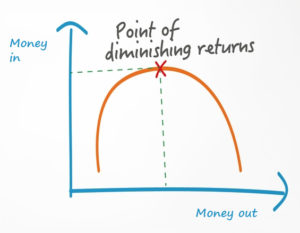
But before we get into our list of things to do, let’s talk about the principle of diminishing returns. The Principle of Diminishing Returns states that you will make more money as you invest in your home up to a certain point. After that point you will actually be losing money. For example, if you were to upgrade your bathroom and you decideded to install a $10,000 spa shower you likely aren’t increasing the value of your home by $10,000. Although most home buyers will like the shower, they are not willing to dish out the extra cash for it. Usually a regular tub and shower will suffice.

The Principle of Diminishing Returns

When it comes to selling your home, simple updates are optimal. It’s best not to go all out, or, as I like to say “update it but don’t complicate it”. With that being said, here are some things you can get started today to get your home ready to sell.

The Kitchen
The focal point of most showings. One of the first things our clients will do when we show them a home is head towards kitchen. It’s where they’ll spend a considerable amount of time and it’s also where they’ll be entertaining friends and family so it makes sense to put some money into upgrades if it looks a little outdated. But not all kitchens need to be renovated. As long as it’s in good shape that’s all that matters, at least when it comes to selling a home. Remember, going overboard with renovations will actually cost you more in the end. Sometimes just updating the appliances makes a world of difference, especially if the fridge looks like it’s from 1985.

The Bathroom
If your bathroom still has that old green or pink bathtub it might be due for an update. As with the kitchen, if you’re looking to make your money back then don’t go all out. Put in a new tub and maybe a new toilet, update the vanity and put down some new flooring down and you’re done! If everything looks to be in good condition maybe just do a few touch ups like redoing the caulking around the tub, some fresh paint, and maybe some new handles on the cabinets and drawers.

Electrical
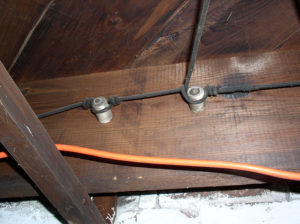
Is there really old wiring in your home? Not only is this a common concern for many buyers it’s also a common issue with trying to get home insurance, which can cause a damper on the sale of your home. Look at the wiring in the roof of an unfinished room downstairs to see if you have knob and tube wiring. If you do you should contact a certified electrician to assess and possibly update the wiring. Another area to look at is the panel box. breakers are preferred over fuses, although many homes have a fuse box and have no issues unless it is a 60 amp service. These 60 amp panels usually need to be upgraded for insurance purposes.

Knob and Tube Wiring

Plumbing and Heating Systems
Make sure everything is up to date. Get your furnance serviced and check to see if the hot water tank is in good condition. While you’re peeking around, check any exposed pipes to see if there are any potential leaks or if anything looks like it should be replaced.

Floors
Installing new flooring is one thing most home sellers do because it’s relatively cheap and it makes a big difference. Nowadays you can find some pretty nice quality vinyl and laminant flooring for a good price at most hardware stores. If your current floors are in good condition I wouldn’t worry too much about this as people’s tastes differ and a potential buyer might even rip up your new floor to put something else down. But if it looks overdue then it might be a job you should tackle now.

Finishing Touches
It’s the little things that make a big difference. Installing new handles on your cupboard doors and matching them with new door knobs, new sink faucets, replacing cracked faceplates on light swithes and electrical outlets, and fixing up baseboards and door trim will all do wonders. At the very least a fresh coat of paint throughout the house will make it look like a whole new place.

De-clutter and Downsize
Since you’ll be moving, it might be a good time to pack up any items you don’t regularily use and get them out of the way. Use this time to organize and maybe find some things that you can sell in a yardsale or give away. De-cluttering also has the effect of making the home appear to have more space, which is a huge selling point.

Tip
Is your home already in good condition and ready for sale? A good idea might be to get your home pre-inspected by a home inspector. Getting your home inspected before listing it has two benefits. One, it will give you a chance to fix some things you may not be aware of so it doesn’t become an issue later on in a sale where the purchaser will most likely try to renegotiate the price. And two, it gives buyers peace of mind when they are viewing your home because they know exactly what they are getting before they even consider making an offer. This can be the deciding factor if they are trying to decide whether to make an offer on your house or somebody elses’.

Still Need Some Help?
If you’re thinking of selling and not sure what to spend your money on, why not give us a call and one of our team members will stop by and give you a few pointers. We will make sure you spend money on the things that count and that you don’t waste money on things that don’t matter. Best of all it’s at no cost to you. We are here to help.

Mortgage Terms Explained

Mortgage Terms Explained

Buying a house can be a bit confusing at times, especially if it’s your first time buying one. It’s even more confusing when big words are thrown at you like “amortization”, and don’t even get me started on compounding interest rates. Hopefully this list of mortgage terms will help you feel more confident when sitting down to discuss lending options with your bank or mortgage broker

Amortization: One of the more confusing words you’ll come across but it’s actually an easy one – it’s the amount of time you will take to pay off the loan. Typically this will be 20 or 25 years.

Term: The amortization (expalined above) is usually divided into several “terms”. At the end of a term you can either pay off the remaining balance of the mortgage without any prepayment penalties (expalined below) or you can renew the loan for another term. For example: John gets a mortgage with an amortization of 20 years and a term of 5 years. At the end of the 5 year term John has the option to pay off his mortgage or renew it for another 15 years with a new 5 year term.

Principal: This is the total outstanding balance of your loan.

Interest: Interest rates on mortgages in Canada are compounded semi-annually. This means the interest rate is applied twice per year.

Open vs Closed Mortgage: An open mortgage allows you to pay off your mortgage or change lenders at any time without incurring a prepayment penalty. A closed mortgage gives you a set payment schedule that you must follow. If you make any lump sum payments before the end of your term you will have to pay a penalty. Interest rates for closed mortgages are lower than for open mortgages and most closed mortgages give you options for making extra payments to avoid penalties.

Fixed Rate vs Variable Rate: A fixed rate means your interest rate stays the same throughout the term of the mortgage. A variable rate (also called a floating rate) means your interest rate as well as your monthly payment will change if the prime lending rate changes. By assuming the risk of fluctuating interest rates and payments you will typically be offered a lower rate than for a fixed rate mortgage.

Prime Rate: The Prime rate is linked to the Bank of Canada’s overnight lending rate, which reflects the rate they charge when they loan funds to other banks; it is tied to global financial markets and monetary policy.

Portability: Because not everyone is happy paying a prepayment penalty, lenders came out with an option that keeps everyone happy – mortgage portability. This allows you to transfer your current mortgage to a new property that you are buying. All the terms of the mortgage typically stay the same. You can take advantage of this feature if your interest rate is lower than current rates. Instead of breaking the mortgage and getting a higher rate you can just “port” your mortgage to the new property.

Conventional vs High-Ratio Mortgages: High-ratio mortgages are when you loan more than 80% of the home’s value (ie. less than 20% down payment). Most mortgages are high-ratio mortgages. If you are putting the minimum 5% down on your home then it is considered a high-ratio mortgage because you are taking out a loan for more than 80% of the homes value. Anything less than 80% of the home’s value (or a down payment of 20% or more) is considered a conventional mortgage.

Pre-Approval: The first step in getting financing is getting a pre-approval. This is a way for you to find out how much you qualify for before you go house shopping. You can also usually lock in the rate for a specified period of time.

Government Funding Programs

Government Funding Programs

There are a number of government funding programs for home buyers and current homeowners to help with the costs of buying or updating a home in Canada. Although each of the provinces have their own provincial programs, there are a few federal programs as well. Below is a list of the Federal programs as well as provincial programs for Newfoundland and Labrador.

Down Payment Assistance
Federal Funding Programs

Federal Programs

First-Time Home Buyers’ Tax Credit
A $5,000 non-refundable income tax credit on a qualifying home. The credit provides up to $750 in tax relief to assist first-time home buyers with their purchase costs.

Home Buyers’ Plan
A one-time withdrawal up to $25,000 from a Registered Retirement Savings Plan (RRSP) by first-time home buyers to help purchase or build a home. Generally you have to repay all withdrawals from your RRSP within 15 years.

CMHC Green Home Program
When you use CMHC-insured financing to buy or build an energy-efficient home or make energy-saving renovations, you may qualify for a premium refund of 10% on your mortgage default insurance and a premium refund for a longer amortization period (if applicable)

Down Payment Assistance
Provincial Funding Programs

Provincial Programs

Downpayment Assistance Program (DAP)
Applicants must be first-time home buyers who live in the province and meet the requirements. This program will assist approximately 100-125 applicants annually. The program will provide eligible households a repayable loan of up to 5% for down payment on a new or existing home (purchase price must be less than $200,000 in Clarenville, Gander, Grand Falls-Windsor, Corner Brook and Stephenville and all communities within a 30 km radius). The amount of the loan will be based on a sliding scale that takes into consideration the applicant’s household income level and the cost of the home being purchased. Typically household income levels must be under $75,000 to qualify and the interest rates on the loans vary but will not exceed the prime lending rate minus 1%.

Home Energy Savings Program (HESP)
Available as of July 4, 2017. It is a provincial initiative designed to assist low-income households with electrically heated homes which consume 15,000+ kWh of electricity annually. The program will provide non-repayable grants of up to $5,000 to help these households make energy efficiency upgrades to their homes.

Home Modification Program (HMP)
This program is designed to provide funding to assist homeowners with low-to-moderate income who require accessibility changes to their residences, which can help promote independence, self-reliance, assist with a better quality of life, and enable individuals to remain in their own homes for a longer period. The program is available to homeowners with low-to-moderate income requiring accessibility modifications to their homes (an Occupational Therapist’s report is required clearly indicating whether modifications are urgent or non-urgent). Applicants must have an income of $46,500 or less. Newfoundland and Labrador Housing Corporation provides funding to eligible homeowners in the form of forgivable grants and repayable loans. Funding is limited to the costs associated with repairs. Persons with accessibility needs may receive a forgivable loan of up to $7,500. Repairs exceeding these levels may be addressed under a repayable loan of up to $10,000

Provincial Home Repair Program (PHRP)
This program is designed to assist homeowners with low income who require repairs to their homes, or to bring dwellings up to minimum fire and life safety standards, with improvements in basic heating, electrical and plumbing services. To be eligible for this program homeowners must have an income of $32,500 or less, and must have owned the home for at least 5 years (except in the case of an emergency). There is a lifetime assistance cap of $12,500 and an application for a second project can be submitted after 7 years. Newfoundland and Labrador Housing Corporation provides funding to eligible homeowners in the form of forgivable and repayable loans. Funding is limited to the costs associated with repairs. Forgivable loan funding is available for homeowners up to a maximum of $5,000 ($6,500 in Labrador). Repairs exceeding these levels may be addressed under a repayable loan of up to $12,500 ($15,000 in Labrador).

June 2017 Market Update

Real Estate Market Update

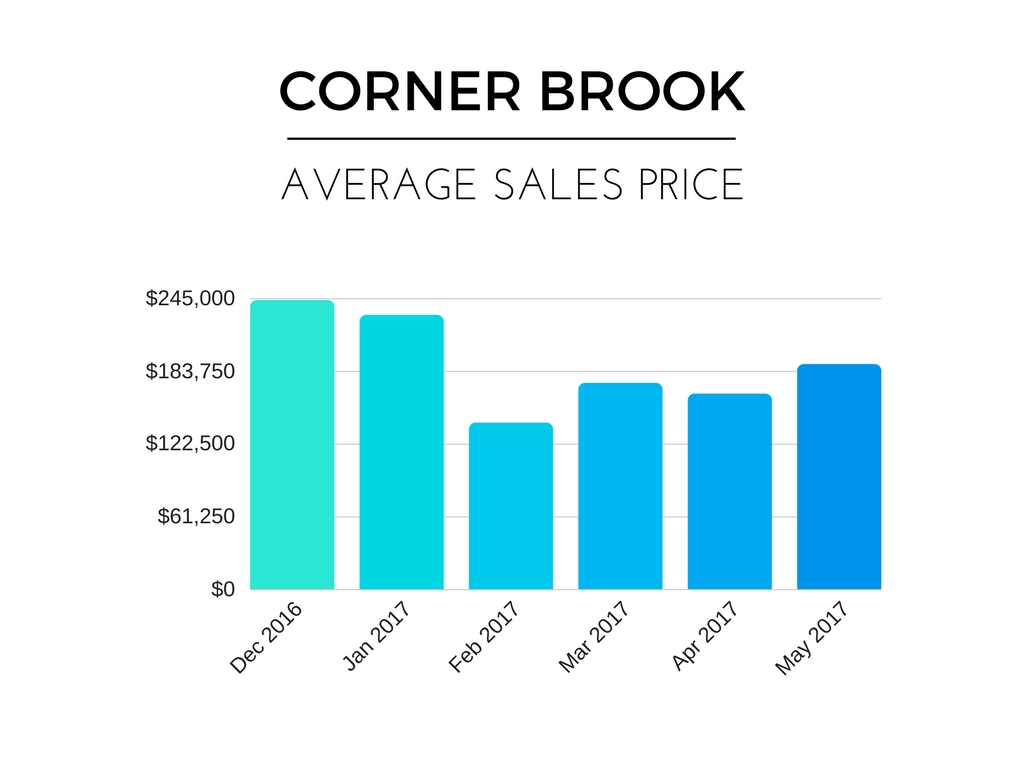
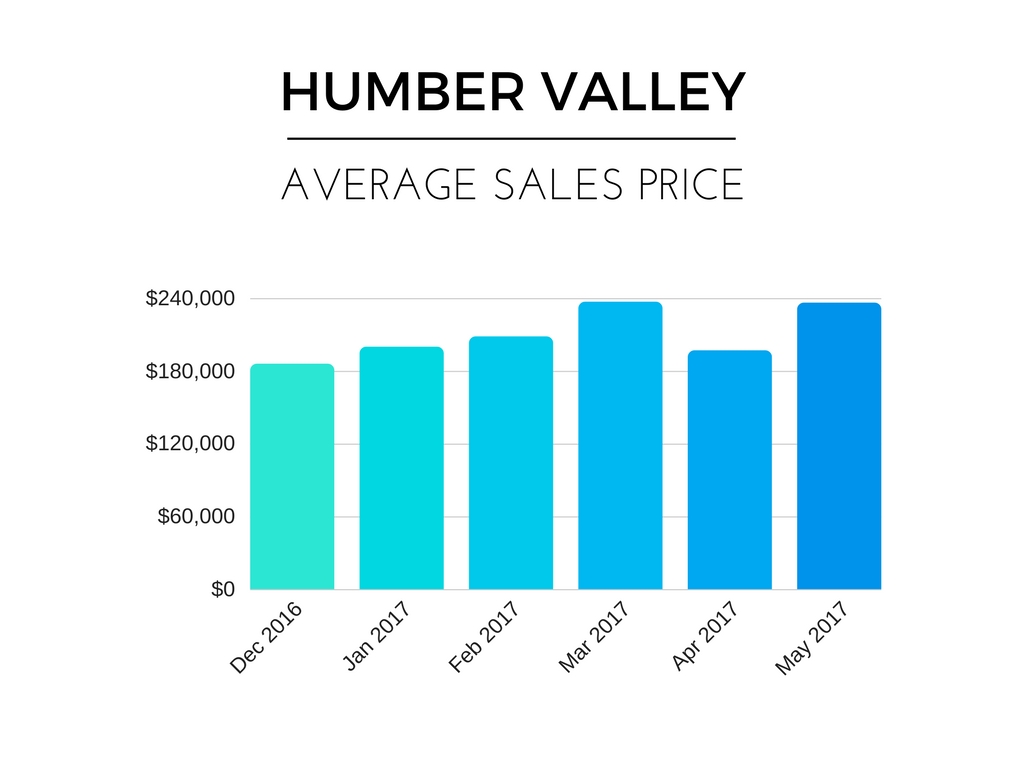
Here’s a quick market snapshot of what’s been happening in Corner Brook and the Humber Valley over the last six months

Corner Brook Average Sales Price

Humber Valley Average Sales Price

Corner Brook
The Corner Brook market has been relatively steady, hovering around the $180,000 mark. The drop in average price during the early months of 2017 is mostly due to more lower-priced homes selling as well as a higher number of listings on the market.

Pasadena
Pasadena also has a higher number of listings than previous yearly average.

Deer Lake
The strongest market has been Deer Lake, where the number of listings has been steady and the average price rose just slightly.

Making Your Home More Show-able

How to Make Your Home More Show-able

First impressions have a lasting effect. Most buyers will know if they’ve found ‘the one’ within 30 seconds of walking through the front door. By keeping your home clean, tidy, and organized you can turn a bad first impression into a great one that may result in getting your home sold faster, and for more money! Who doesn’t like that? Once you get them through this initial stage it is important to live up to the expectations. Here are a few quick tips on making your home more show-ready.

Depersonalize:
Buyers need to be able to picture themselves and their belongings in your home. The less distractions they have the easier it will be for them to visualize where their furniture is going to go. Family photos, degrees, trophies and your own personal touches may not appeal to everyone. Keep in mind that the house will ultimately end up as someone else’s home and that person will have a unique style and personal touches to add. Use neutral colours whenever possible. Bright colours and busy patterns often make it difficult to imagine what another style or theme would look like.

De-Clutter:
Few things deter potential buyers more than a cluttered living space. Many buyers will have their mind made up already once they walk into cluttered living space. It doesn’t matter if the space will be empty when they move in, it’s that first impression that makes a huge difference. Start by packing up everything you don’t need into boxes and storing them out of sight (you’ll be moving soon anyway, right?). Clear the tables and counter tops and make sure everything is neat and tidy. Try to have as much open walking space as possible – remember, open space makes a room appear larger than it really is!

Repair:
That broken face plate may go unnoticed by you, but anyone viewing your home is going to notice it right away. It might not make a difference to you, but a buyer might wonder what other maintenance has been neglected. replace broken light bulbs. The simple things make a HUGE difference. Small repairs are cheap and easy to do and they can renew life to an otherwise old and beat down home. Leaky faucets, chipped paint and dinged baseboards are all relatively easy fixes. You can even fix the scratches on cupboards fairly easily with a touch-up stick.

Maximize Curb Appeal:
You could do everything right, but it might be a lost effort if you forget about the first thing that a person sees when they drive up to your home. What does your house look like from the street? Is the lawn landscaped, or is at least the grass cut? What about the fence, does it need a new layer of paint? Most of this sounds pretty logical but it’s amazing how often these things go unnoticed by the homeowner. Keep the outside of the house looking nice and nobody should be driving past your “For Sale” sign.