

2019 Federal Budget Adds More Help For First-Time Home Buyers

2019 Federal Budget Canada

With rising housing costs across the country, the federal government has been pressured to do something to help younger first-time home buyers who have been priced out of the higher priced areas such as Toronto and Vancouver. The federal budget for 2019 has been released and there are two main additions regarding real estate and first-time home buyers.

CMHC First-Time Home Buyer Incentive

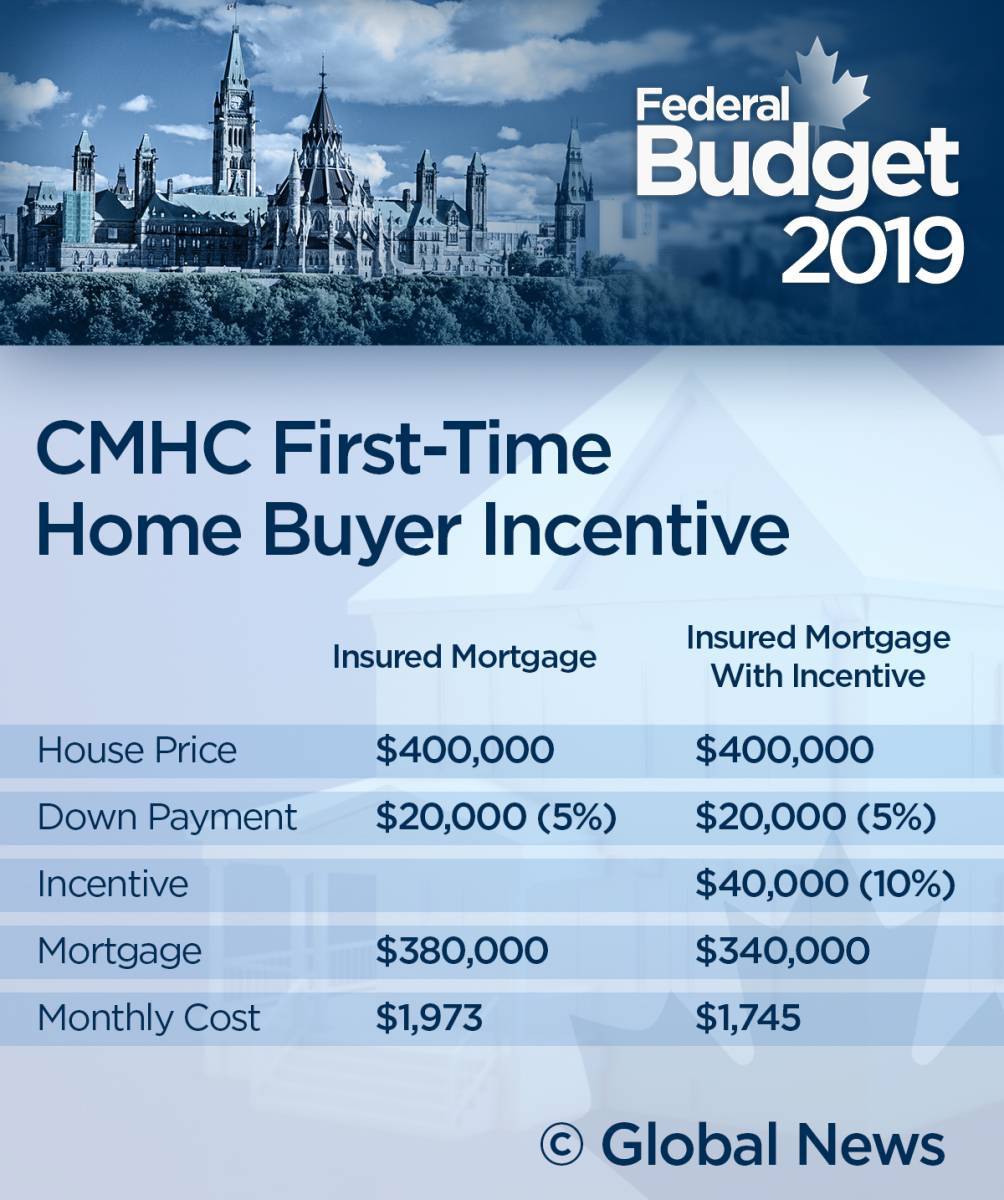
The budget introduced the Canadian Mortgage and Housing Corporation (CMHC) First-Time Home Buyer Incentive. This allows prospective buyers who have the minimum down payment for a home to apply to finance between 5% and 10% of their mortgage via a shared equity program. Buyers can get up to 10% on newly constructed homes while 5% applies to existing homes. This would lower the mortgage amount borrowed and would help first-time home buyers qualify for a higher mortgage, even with the mortgage stress test, while also lowering their monthly mortgage payments.

This incentive would only apply to insured mortgages and the buyer would still have to come up with the minimum 5% down payment. Applicants must have a maximum household income of no more than $120,000 and the purchase price of the home can only be 4 times their household income. So, for a family of first-time home buyers with an annual household income of $80,000 the total mortgage size would be $320,000.

The budget document states “For example, if a borrower purchases a new $400,000 home with a 5% down payment and a 10% CMHC shared equity mortgage ($40,000), the borrower’s total mortgage size would be reduced from $380,000 to $340,000, reducing the borrower’s monthly mortgage costs by as much as $228 per month.”

Buyers will still have to repay the loan, although it is unclear at this point what the terms would be. Applicants still must qualify under the federal stress test, which ensures that borrowers will be able to keep up with their payments if their interest rates were to increase. However, the lower mortgage means the borrower would only need to qualify for the lower mortgage amount.

The finance department is hoping the new program will pass in time for a September, 2019 launch.
First-Time Home Buyer Incentive

Home Buyers’ Plan (HBP) Gets An Increase

The amount a borrower can withdraw from their RRSP for a down payment using the Home Buyers’ Plan (HBP) has been increased for the first time in 10 years. With increasing home values the federal government has increased the amount you can withdraw from your RRSP account from $25,000 to $35,000, or $70,000 per couple. The new limit will apply to withdrawals made after March 19, 2019, making it effective immediately.


2019 Corner Brook Real Estate Market Outlook

2019 Corner Brook Real Estate Market

What Happened In 2018

The Corner Brook real estate market has been slowing down over the last few years and we are now in a buyer’s market. Last year we saw the number of new listings decrease by 6.7% compared to 2017 while sales stayed the same (189 sales in 2017 and 190 sales in 2018). It’s a great time to find a good deal on a new home. If you’re a seller looking to get your home sold then it’s important to make sure your REALTOR© offers extensive marketing on your property.

Days On Market (the number of days it takes a home to sell when priced at market value) dropped to 79 days, however the average home price also dropped to $199,404, for all housing types. Interestingly, the median sales price dropped by a larger margin, telling us that more homes are selling in the lower price range of about $185,000 as opposed to the same home selling for less, although the average sale price did drop by 3.6%

2017 2018 Percent Change
Average Sale Price $206,795 $199,404 -3.6%
Median Sale Price $199,900 $184,500 -7.7%
Days on Market 94 79 -16%
Total New Listings 401 374 -6.7%
Total Sales 189 190 0.1%
Sale to List Price Ratio 94.3% 93.9%


2017 2018 Percent Change
Single Family $204,856 $197,985 -3.6%
2-Apartment $234,960 $237,222 1%
Mobile Homes $59,500 $59,417

What To Expect In 2019

Last year the province had the lowest GDP growth of 0.4%. This year we are expected to lead all other provinces with a GDP growth of 5.2%. This is mostly fueled by increased offshore oil royalties and oil projects such as the By Du Nord project coming online. With new money being pumped into the economy we are hoping to see a rebound in the real estate market in 2019. We are already seeing increased activity in the first two months of this year.

If you have any questions about the real estate market you can call/text Mike Bishop at (709) 638 – 4655 or email mikebishop@hotmail.com

Mortgage Terms Explained

Mortgage Terms Explained

Buying a house can be a bit confusing at times, especially if it’s your first time buying one. It’s even more confusing when big words are thrown at you like “amortization”, and don’t even get me started on compounding interest rates. Hopefully this list of mortgage terms will help you feel more confident when sitting down to discuss lending options with your bank or mortgage broker

Amortization: One of the more confusing words you’ll come across but it’s actually an easy one – it’s the amount of time you will take to pay off the loan. Typically this will be 20 or 25 years.

Term: The amortization (expalined above) is usually divided into several “terms”. At the end of a term you can either pay off the remaining balance of the mortgage without any prepayment penalties (expalined below) or you can renew the loan for another term. For example: John gets a mortgage with an amortization of 20 years and a term of 5 years. At the end of the 5 year term John has the option to pay off his mortgage or renew it for another 15 years with a new 5 year term.

Principal: This is the total outstanding balance of your loan.

Interest: Interest rates on mortgages in Canada are compounded semi-annually. This means the interest rate is applied twice per year.

Open vs Closed Mortgage: An open mortgage allows you to pay off your mortgage or change lenders at any time without incurring a prepayment penalty. A closed mortgage gives you a set payment schedule that you must follow. If you make any lump sum payments before the end of your term you will have to pay a penalty. Interest rates for closed mortgages are lower than for open mortgages and most closed mortgages give you options for making extra payments to avoid penalties.

Fixed Rate vs Variable Rate: A fixed rate means your interest rate stays the same throughout the term of the mortgage. A variable rate (also called a floating rate) means your interest rate as well as your monthly payment will change if the prime lending rate changes. By assuming the risk of fluctuating interest rates and payments you will typically be offered a lower rate than for a fixed rate mortgage.

Prime Rate: The Prime rate is linked to the Bank of Canada’s overnight lending rate, which reflects the rate they charge when they loan funds to other banks; it is tied to global financial markets and monetary policy.

Portability: Because not everyone is happy paying a prepayment penalty, lenders came out with an option that keeps everyone happy – mortgage portability. This allows you to transfer your current mortgage to a new property that you are buying. All the terms of the mortgage typically stay the same. You can take advantage of this feature if your interest rate is lower than current rates. Instead of breaking the mortgage and getting a higher rate you can just “port” your mortgage to the new property.

Conventional vs High-Ratio Mortgages: High-ratio mortgages are when you loan more than 80% of the home’s value (ie. less than 20% down payment). Most mortgages are high-ratio mortgages. If you are putting the minimum 5% down on your home then it is considered a high-ratio mortgage because you are taking out a loan for more than 80% of the homes value. Anything less than 80% of the home’s value (or a down payment of 20% or more) is considered a conventional mortgage.

Pre-Approval: The first step in getting financing is getting a pre-approval. This is a way for you to find out how much you qualify for before you go house shopping. You can also usually lock in the rate for a specified period of time.

Government Funding Programs

Government Funding Programs

There are a number of government funding programs for home buyers and current homeowners to help with the costs of buying or updating a home in Canada. Although each of the provinces have their own provincial programs, there are a few federal programs as well. Below is a list of the Federal programs as well as provincial programs for Newfoundland and Labrador.

Down Payment Assistance
Federal Funding Programs

Federal Programs

First-Time Home Buyers’ Tax Credit
A $5,000 non-refundable income tax credit on a qualifying home. The credit provides up to $750 in tax relief to assist first-time home buyers with their purchase costs.

Home Buyers’ Plan
A one-time withdrawal up to $25,000 from a Registered Retirement Savings Plan (RRSP) by first-time home buyers to help purchase or build a home. Generally you have to repay all withdrawals from your RRSP within 15 years.

CMHC Green Home Program
When you use CMHC-insured financing to buy or build an energy-efficient home or make energy-saving renovations, you may qualify for a premium refund of 10% on your mortgage default insurance and a premium refund for a longer amortization period (if applicable)

Down Payment Assistance
Provincial Funding Programs

Provincial Programs

Downpayment Assistance Program (DAP)
Applicants must be first-time home buyers who live in the province and meet the requirements. This program will assist approximately 100-125 applicants annually. The program will provide eligible households a repayable loan of up to 5% for down payment on a new or existing home (purchase price must be less than $200,000 in Clarenville, Gander, Grand Falls-Windsor, Corner Brook and Stephenville and all communities within a 30 km radius). The amount of the loan will be based on a sliding scale that takes into consideration the applicant’s household income level and the cost of the home being purchased. Typically household income levels must be under $75,000 to qualify and the interest rates on the loans vary but will not exceed the prime lending rate minus 1%.

Home Energy Savings Program (HESP)
Available as of July 4, 2017. It is a provincial initiative designed to assist low-income households with electrically heated homes which consume 15,000+ kWh of electricity annually. The program will provide non-repayable grants of up to $5,000 to help these households make energy efficiency upgrades to their homes.

Home Modification Program (HMP)
This program is designed to provide funding to assist homeowners with low-to-moderate income who require accessibility changes to their residences, which can help promote independence, self-reliance, assist with a better quality of life, and enable individuals to remain in their own homes for a longer period. The program is available to homeowners with low-to-moderate income requiring accessibility modifications to their homes (an Occupational Therapist’s report is required clearly indicating whether modifications are urgent or non-urgent). Applicants must have an income of $46,500 or less. Newfoundland and Labrador Housing Corporation provides funding to eligible homeowners in the form of forgivable grants and repayable loans. Funding is limited to the costs associated with repairs. Persons with accessibility needs may receive a forgivable loan of up to $7,500. Repairs exceeding these levels may be addressed under a repayable loan of up to $10,000

Provincial Home Repair Program (PHRP)
This program is designed to assist homeowners with low income who require repairs to their homes, or to bring dwellings up to minimum fire and life safety standards, with improvements in basic heating, electrical and plumbing services. To be eligible for this program homeowners must have an income of $32,500 or less, and must have owned the home for at least 5 years (except in the case of an emergency). There is a lifetime assistance cap of $12,500 and an application for a second project can be submitted after 7 years. Newfoundland and Labrador Housing Corporation provides funding to eligible homeowners in the form of forgivable and repayable loans. Funding is limited to the costs associated with repairs. Forgivable loan funding is available for homeowners up to a maximum of $5,000 ($6,500 in Labrador). Repairs exceeding these levels may be addressed under a repayable loan of up to $12,500 ($15,000 in Labrador).

June 2017 Market Update

Real Estate Market Update

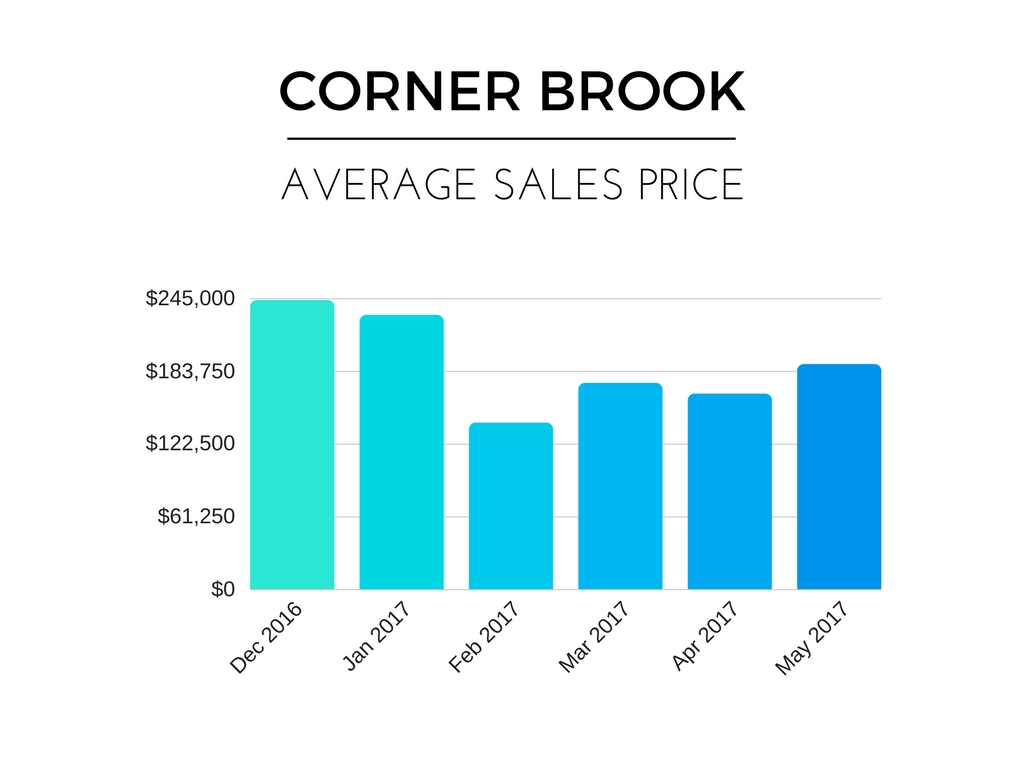
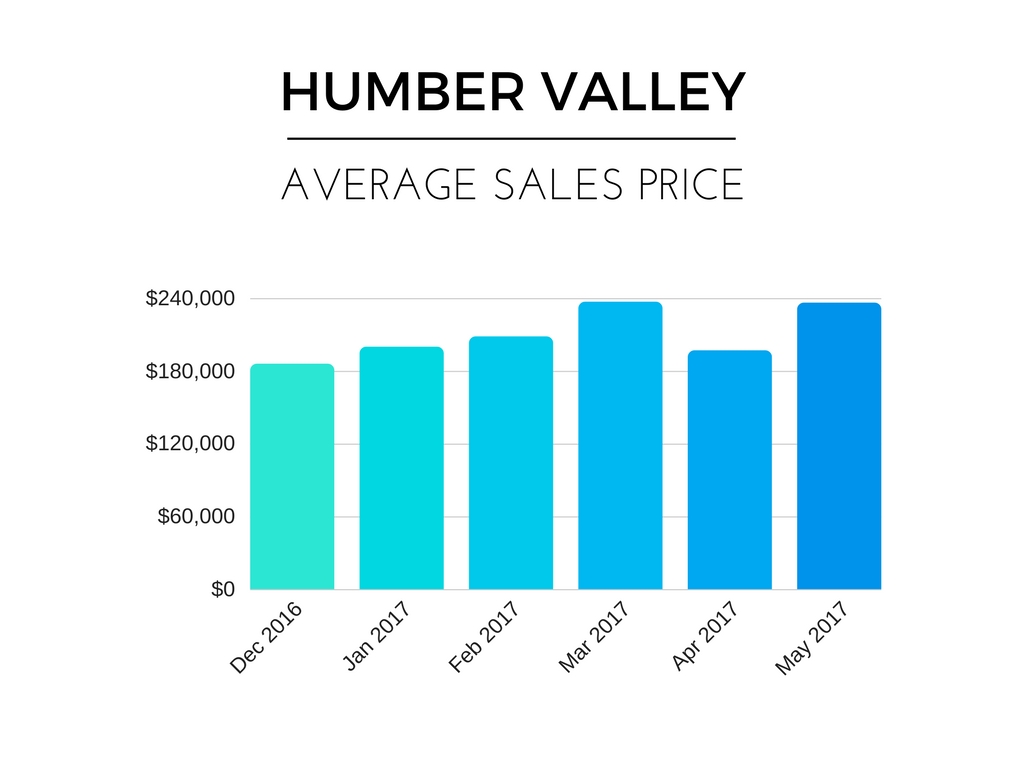
Here’s a quick market snapshot of what’s been happening in Corner Brook and the Humber Valley over the last six months

Corner Brook Average Sales Price

Humber Valley Average Sales Price

Corner Brook
The Corner Brook market has been relatively steady, hovering around the $180,000 mark. The drop in average price during the early months of 2017 is mostly due to more lower-priced homes selling as well as a higher number of listings on the market.

Pasadena
Pasadena also has a higher number of listings than previous yearly average.

Deer Lake
The strongest market has been Deer Lake, where the number of listings has been steady and the average price rose just slightly.